
Washington, D.C., April 2025 NASA is set to launch the first space-based quantum sensor designed to measure gravity with unprecedented accuracy. Developed in collaboration with NASA’s Jet Propulsion Laboratory (JPL), private companies, and academic institutions, the Quantum Gravity Gradiometer Pathfinder (QGGPf) marks a breakthrough in quantum sensing and Earth science.
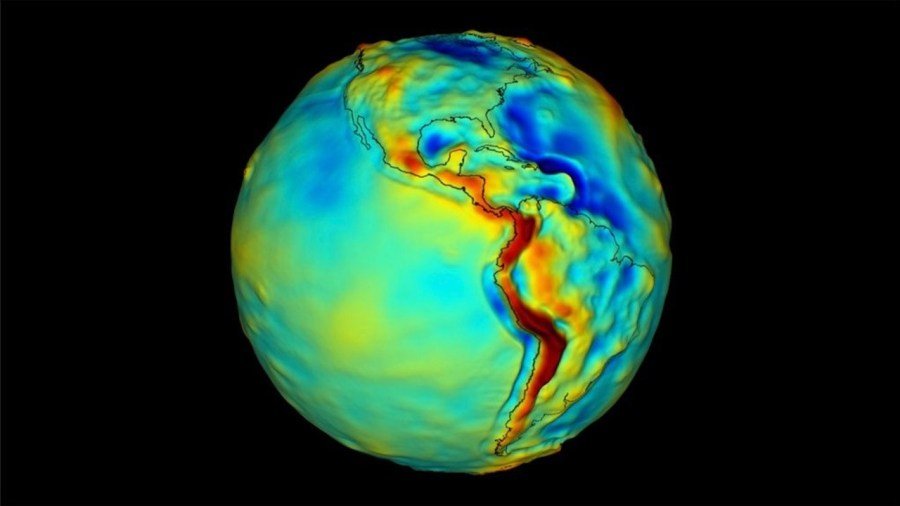
How Quantum Technology Will Measure Earth’s Gravity
The QGGPf will use two clouds of ultracold rubidium atoms to function as ultra-sensitive test masses. These atomic clouds—cooled to near absolute zero—are manipulated using lasers to measure minute differences in acceleration, allowing the sensor to detect subtle variations in the Earth’s gravitational field.

This compact instrument, weighing just over 275 pounds (125 kilograms) and occupying a volume of 0.25 cubic meters, is significantly smaller and lighter than traditional gravity sensors used in space. Despite its size, its sensitivity is projected to be up to ten times greater than current space-based gravity instruments.
Why This Mission Matters: From Water to Planetary Discovery
The ability to map gravity from orbit with such precision has broad implications. According to NASA, the mission could pave the way for:

-
Tracking freshwater aquifers
-
Detecting underground mineral and oil deposits
-
Monitoring volcanic activity and tectonic shifts
-
Understanding changes in global sea levels
-
Exploring subsurface features of other planets and moons
The gravitational field of Earth is constantly changing due to geological and environmental processes. The QGGPf aims to provide more accurate long-term gravity data to support both environmental monitoring and planetary exploration.
Cutting-Edge Partnerships Fuel Innovation
This mission is supported by NASA’s Earth Science Technology Office (ESTO) and features key partnerships:
-
Jet Propulsion Laboratory (JPL) is leading the mission.
-
AOSense and Infleqtion are refining sensor head technologies.
-
Vector Atomic and NASA’s Goddard Space Flight Center are advancing the laser optical systems.
These collaborations bring together expertise in quantum physics, optics, and aerospace engineering, forming a powerful consortium to deliver next-generation quantum sensors.

Pathfinder Mission to Shape Future of Space-Based Sensing
The QGGPf is scheduled for launch later this decade as a technology validation mission. If successful, it could transform the way we observe and understand gravitational interactions, not just on Earth, but across the solar system.
By using atomic-scale manipulation of matter and light, NASA aims to push the frontiers of both space exploration and Earth observation. This effort reflects a growing trend of integrating quantum technology into mainstream space missions, further enabling a future where precision measurements reveal the hidden structures beneath our feet—and on distant worlds.

Author Profile

- My name is Ganpat Singh Choughan. I am an experienced content writer with 7 years of expertise in the field. Currently, I contribute to Daily Kiran, creating engaging and informative content across a variety of categories including technology, health, travel, education, and automobiles. My goal is to deliver accurate, insightful, and captivating information through my words to help readers stay informed and empowered.
Latest entries
 HEADLINESMarch 29, 2026BJP MP Ramesh Awasthi Advocates for Bharat Ratna for Ganesh Shankar Vidyarthi
 RAJASTHANMarch 29, 2026Chief Minister Reviews State Schemes in Video Conference Meeting
 HEADLINESMarch 29, 2026Ashok Gehlot Criticizes Government Over Delayed Cricket Stadium Project
 HEADLINESMarch 29, 2026BJPs Madan Rathore Criticizes Congress for Damaging National Image