
DBT Scheme: A Game-Changer for India’s Welfare Economy
India’s Direct Benefit Transfer (DBT) system has emerged as a landmark initiative, offering direct financial benefits to millions of poor households while ensuring significant savings for the government. According to a recent report by Blueraft Digital Foundation, shared by the Finance Ministry, the DBT framework has not only streamlined subsidy distribution but also prevented wastage, saving a staggering ₹3.48 lakh crore between 2009 and 2024.
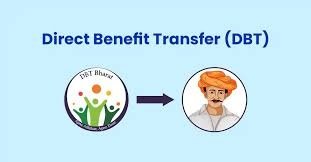
Introduced to bring transparency and efficiency in government welfare schemes, DBT has significantly reduced leakage, minimized fraud, and expanded the reach of public welfare programs.

Massive Impact: From 16% to 9% of Government Spending
Prior to the implementation of DBT (2009–2013), subsidies accounted for 16% of total government expenditure, averaging ₹2.1 lakh crore annually. With the introduction of DBT, this has now dropped to just 9% in 2023–24, even though the number of beneficiaries has increased 16 times.
This indicates a major enhancement in fiscal efficiency, demonstrating that more people are being served with less financial burden on the government — a win-win scenario for both citizens and policymakers.

Breakdown of Savings by Sector
-
₹1.85 lakh crore saved under the Food Subsidy (PDS) program, accounting for 53% of total DBT savings, largely due to Aadhaar-based ration card verification
-
MNREGA saw timely wage disbursement in 98% of cases, resulting in ₹42,534 crore saved through enhanced accountability
-
PM-Kisan Samman Nidhi scheme prevented 2.1 crore ineligible beneficiaries, saving ₹22,106 crore
-
Fertilizer subsidy reforms led to reduced sales by 158 lakh tonnes, saving ₹18,699.8 crore via targeted delivery
Biometric Authentication Reduces Fraud, Enhances Trust
The success of DBT can be attributed to its biometric verification system, which ensures that only genuine beneficiaries receive benefits. From food subsidies to employment schemes, this approach has drastically reduced theft and inefficiencies, reinforcing public trust in welfare distribution.

The report concludes that India’s DBT infrastructure is now a global model for targeted, transparent, and efficient delivery of welfare programs — serving both social equity and economic prudence.
Author Profile

- My name is Ganpat Singh Choughan. I am an experienced content writer with 7 years of expertise in the field. Currently, I contribute to Daily Kiran, creating engaging and informative content across a variety of categories including technology, health, travel, education, and automobiles. My goal is to deliver accurate, insightful, and captivating information through my words to help readers stay informed and empowered.
Latest entries
 International NewsMarch 1, 2026Trump’s Decision to Strike Iran Sparks Political Debate in the U.S.
 International NewsFebruary 28, 2026Concerns Rise Over Extrajudicial Killings of Baloch Students in Pakistan
 Politics, NationalFebruary 28, 2026Sandeep Dikshit Comments on Kejriwals Release in Liquor Policy Case
 Politics, NationalFebruary 28, 2026Rahul Gandhi Urges Finance Minister to Increase ECHS Funding and Remove Tax on Disability Pension
 Follow Us on WhatsApp
Leave a Comment