NDA Faces Challenges Ahead of December Parliamentary Session
Mumbai, November 27: Prime Minister Narendra Modi has instructed ministers to finalize preparations for the upcoming parliamentary session before December 15. He also advised them to postpone any foreign trips until after the session, according to sources from the news agency PTI. The exact date and duration of the session will be determined by the Cabinet Committee on Parliamentary Affairs.
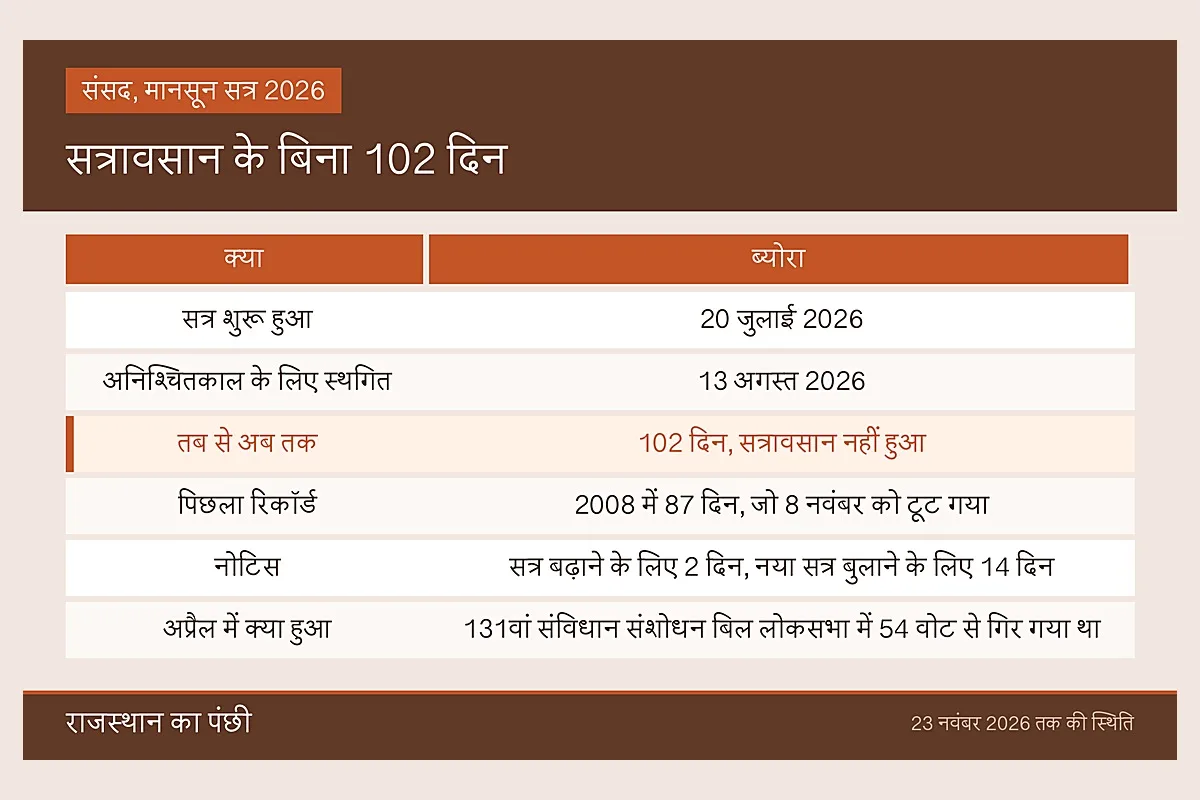
The session will focus on a constitutional amendment bill aimed at increasing the number of Lok Sabha seats from 543 to 850. This bill was previously rejected by a margin of 54 votes on April 17. The key question remains: how has the political landscape shifted in the past seven months?
NDA Still Lacks 20 Votes
Currently, three of the 543 Lok Sabha seats are vacant, leaving 540 seats. A two-thirds majority requires 360 votes. According to PTI’s estimates, the NDA has 318 MPs. If the DMK’s 22 MPs join, the total rises to 340, still leaving a deficit of 20 votes. In the Rajya Sabha, three out of 245 seats are vacant, and the NDA has 153 members, which means they are short by nine votes.
This is why the government is engaging with the DMK and reaching out to smaller parties. The DMK had previously separated from the INDIA alliance in June when Congress joined the Tamil Nadu government led by the Tamilga Vetri Kazhagam.
Decision on 20 MPs Still Pending
Since April, two significant splits have occurred. Twenty MPs from the Trinamool Congress have defected to the NCP, and six out of nine MPs from the Shiv Sena (UBT) merged with Eknath Shinde’s faction, which was approved by the Lok Sabha Speaker on July 18, increasing Shinde’s group to 13 MPs.
The situation regarding the twenty MPs from the Trinamool Congress remains uncertain. Abhishek Banerjee had filed a disqualification petition against them. The Lok Sabha Speaker issued notices on August 26, and the MPs submitted their responses on November 24. The Speaker’s decision is still awaited. This uncertainty is why the NDA’s numbers vary — some reports cite 318, others 314, and some exclude the twenty MPs, showing 293.
Rajasthan’s Seat Count: 46 Instead of 37-38
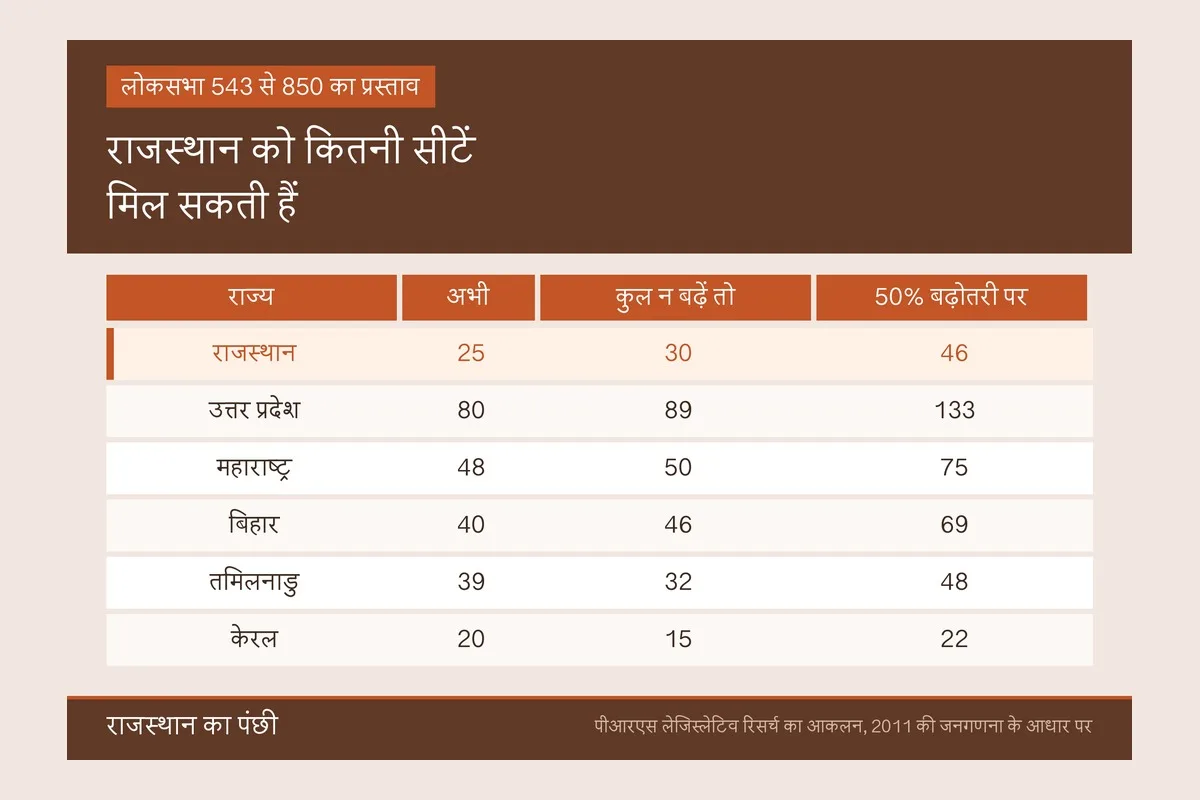
In a report dated November 23, we mentioned that if a 50% increase option is implemented, Rajasthan’s seats could range from 37 to 38. This estimate was based on a direct multiplication. However, a detailed assessment by PRS Legislative Research suggests that Rajasthan could actually receive 46 seats.
The discrepancy arises because PRS does not simply multiply each state’s seats by one and a half; instead, it allocates the total of 815 seats based on the population ratios from the 2011 census. The same analysis indicates that if the total number of seats remains unchanged and only the distribution is population-based, Rajasthan would increase from 25 to 30 seats. In both scenarios, Rajasthan stands to gain.
This analysis also highlights the source of objections from southern states. If the total number of seats does not increase, Tamil Nadu would drop from 39 to 32 seats, and Kerala from 20 to 15, while Uttar Pradesh would rise from 80 to 89 and Bihar from 40 to 46. With the 50% increase option, no state’s seats would decrease — Tamil Nadu would have 48 and Kerala 22. The proposed structure would allocate 815 seats to states and 35 to union territories.
Opposition and Support from Rajasthan
Mallikarjun Kharge has written four letters to the Prime Minister regarding the delimitation process, demanding an all-party meeting before introducing a new constitutional amendment. Conversely, Madan Rathore criticized Congress regarding the delimitation on Tuesday. Currently, Rajasthan has 25 Lok Sabha and 200 assembly seats.
The formal adjournment of the monsoon session has yet to occur, extending the session to 103 days. The government can reconvene the house on two days’ notice while a new session requires a 14-day notice. Voting in April also took place during a special session.