
New Delhi, May 5 The Supreme Court of India has expressed serious concern over the prolonged delay in pronouncing judgments on criminal appeals that were reserved months, and in some cases years, ago. In a significant move aimed at improving judicial efficiency, the apex court has directed all High Courts across the country to submit a status report within one month regarding cases where judgments were reserved on or before January 31, 2025, and are still pending.
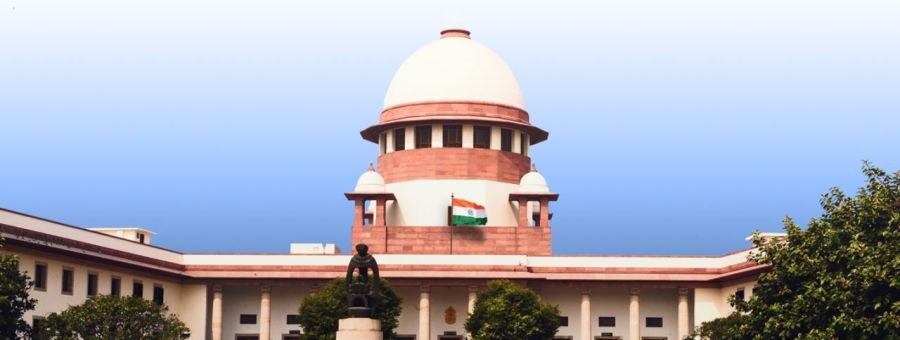
The directive was issued by a bench led by Justice Surya Kant, which remarked that the situation is “deeply troubling”, especially in light of revelations that the Jharkhand High Court has failed to deliver judgments in 67 criminal matters, even after more than a month since hearings concluded and verdicts were reserved.

Apex Court Alarmed by Delay in Jharkhand HC Verdicts
The issue came to light during a hearing of a petition filed by four life-term convicts, who informed the Supreme Court that the Jharkhand High Court has kept its decision pending for over a year, despite having reserved judgment in their criminal appeals. The delay, the petitioners argued, is impeding their right to seek sentence commutation or further legal remedies.
In response, the Registrar General of the Jharkhand High Court submitted that:
-
From January 2022 to December 2024, the Division Bench of the High Court had reserved judgments in 56 criminal appeals, but none have been delivered yet.
-
The Single Bench had similarly reserved decisions in 11 criminal appeals, which also remain pending to date.

These facts triggered sharp observations from the Supreme Court, which emphasized that such delays are unacceptable, especially in criminal matters that directly affect the liberty and fundamental rights of convicts.
Supreme Court to Frame Guidelines for Reserved Judgments
The bench, while noting the broader implications of such delays, remarked that it would consider issuing specific guidelines to ensure that reserved judgments are pronounced within a reasonable timeframe.

“This cannot be allowed to continue. The delay in delivering reserved judgments not only violates the principles of natural justice but also erodes public trust in the judiciary,” the court said.
The bench also underlined that judicial discipline demands timely pronouncement of decisions, particularly in cases involving criminal convictions, as delays undermine the integrity of the appellate process.

Nationwide Compliance Ordered
In a bid to assess the extent of the problem nationwide, the Supreme Court has:
-
Directed the Registrar Generals of all High Courts to file a status report within four weeks, listing all cases where judgments were reserved on or before January 31, 2025, and are still pending.
-
Indicated that these reports will serve as the basis for formulating a uniform judicial policy on reserved judgments.
-
Warned that systemic delays will be examined in the context of judicial accountability.
This move aligns with the Supreme Court’s ongoing efforts to modernize judicial functioning and reduce case backlogs, which remain a major concern in India’s legal system.

Implications for Judicial Transparency and Efficiency
Legal experts view this order as a strong message from the top court to curb the practice of indefinitely reserving judgments without timely follow-up. The apex court’s move could lead to:
-
Greater transparency in the functioning of higher courts.
-
Timely delivery of justice in sensitive criminal matters.
-
Accountability mechanisms to monitor judicial timelines.
Advocates for judicial reform have long argued for a standard time limit on reserved judgments, similar to international best practices. In some jurisdictions, judges are required to deliver judgments within 60 to 90 days after reserving the matter.

Background: Petition by Convicts Brings Delay to Forefront
The current development stems from a petition filed by four convicts serving life imprisonment, who alleged that the delay by Jharkhand High Court in pronouncing the judgment in their criminal appeal had left them in legal limbo. Without a verdict, they are unable to:
-
File a petition for reduction in sentence.
-
Seek remission or pardon.
-
Appeal to a higher forum.
Their case became the catalyst for the Supreme Court’s broader inquiry into the status of reserved judgments across all High Courts.

What’s Next?
The Supreme Court is expected to:
-
Review the status reports from all High Courts in its next hearing.
-
Frame binding guidelines or directives to ensure that judgments are delivered within a stipulated time.
-
Possibly recommend internal mechanisms within courts to flag and escalate delayed verdicts.
This proactive stance by the judiciary is likely to accelerate long-pending cases, particularly in the criminal justice system, where delays can directly affect personal liberty and due process.
Key Highlights:
-
67 criminal appeals remain undecided in Jharkhand HC after being reserved.
-
Supreme Court directs all High Courts to file status reports by next month.
-
Bench led by Justice Surya Kant calls the situation “highly concerning.”
-
Supreme Court to consider framing national guidelines on time-bound delivery of judgments.
-
Petition by four life convicts prompts national judicial introspection.
Author Profile

- My name is Ganpat Singh Choughan. I am an experienced content writer with 7 years of expertise in the field. Currently, I contribute to Daily Kiran, creating engaging and informative content across a variety of categories including technology, health, travel, education, and automobiles. My goal is to deliver accurate, insightful, and captivating information through my words to help readers stay informed and empowered.
Latest entries
 RAJASTHANApril 10, 2026Villagers Demand Speed Breaker at Devari Intersection Amid Protests
 HEADLINESApril 10, 2026Rajasthan Minister Criticizes Congress Over Delhi Visits and Development Projects
 HEADLINESApril 9, 2026Rajasthan Set for Transformation with Pachpadra Refinery and Jaipur Metro Phase-2 Projects
 RAJASTHANApril 9, 2026जल जीवन मिशन घोटाला: रिटायर्ड IAS सुबोध अग्रवाल गिरफ्तार, हजारों करोड़ के भ्रष्टाचार का मामला