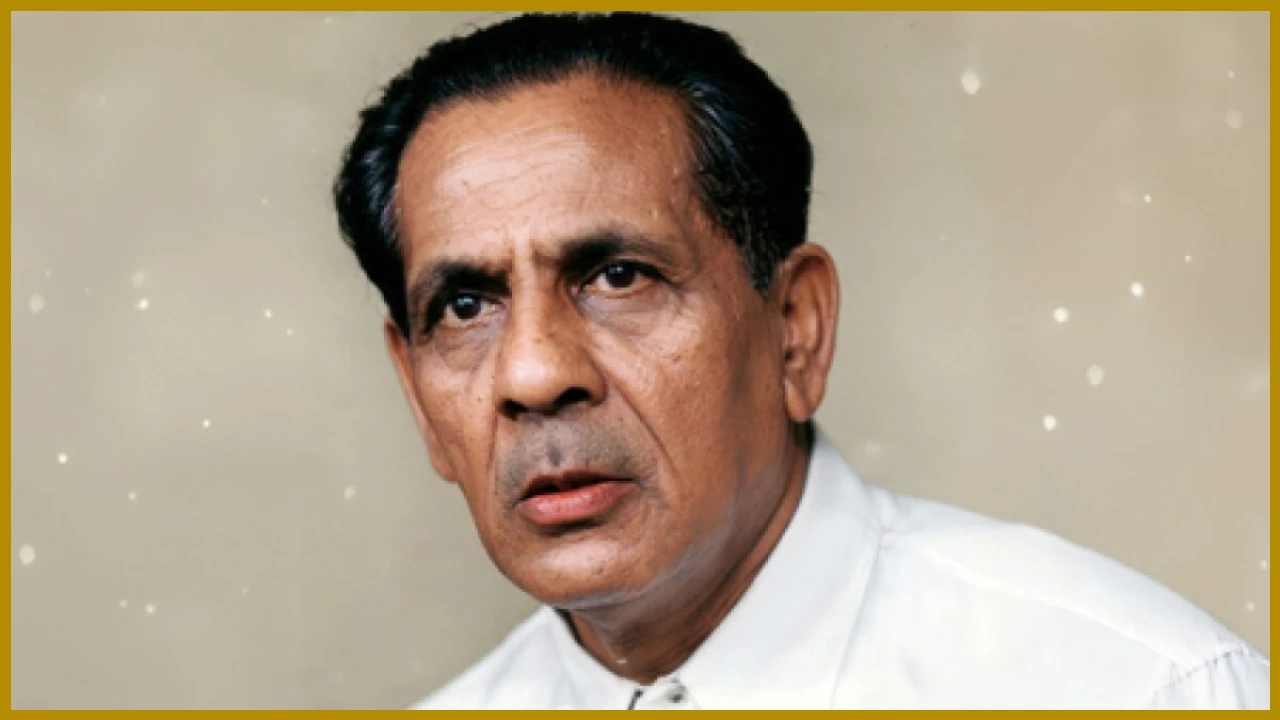
New Delhi, March 3: Renowned for his candid demeanor and contrasting personality, Raghuputi Sahay, known as Firak Gorakhpuri, was a prominent Urdu poet. His poetry reflects a blend of pain, love, and philosophical insights about life. Leaving behind a career in civil service, he joined the freedom struggle and gave new direction to Urdu poetry. His verses remain as relevant and touching today as they were during his lifetime.
Born on August 28, 1896, in Gorakhpur, Firak passed away on March 3, 1982, in Delhi. In an interview, he elaborated on his journey through life and poetry.
Firak began his poetic journey around 1918-1919. The period from 1918 to 1930 marked his initial phase, during which he penned over 100 ghazals, 60-70 rubaiyat, and numerous nazms. This era was characterized by a revival in Urdu poetry, seeking truth, emotions, love, patriotism, morality, and nature’s depiction. Gradually, a new pain and longing emerged in his poetry, becoming his signature voice.
Not only did Firak gain fame through his poetry, but he also played an active role in India’s struggle for independence. He participated in the Civil Disobedience Movement and was imprisoned as a political prisoner by the British government in the 1920s. During the Non-Cooperation Movement, he resigned from his civil service position. He also served as an assistant secretary in the All India Congress Committee at the invitation of Jawaharlal Nehru.
Firak spent 15 months as a political prisoner in Agra Jail, where several mushairas were held. At one such event, he recited a couplet: “This gathering of the living is proof, Firak, that even scattered, these kings remain unperturbed.”
His life beautifully intertwined poetry, the freedom struggle, and education. He expressed deep emotions through his poetry while simultaneously fighting for the country’s independence. His multifaceted personality continues to inspire many.
In 1918, he fell in love with a figure he could never meet, a passion that kept him restless for 12-13 years. He stated that he never treated love superficially. While acknowledging physical attraction, he emphasized nurturing desires with inner warmth. His romantic couplets resonate with solitude, longing, and separation.
He mentioned, “I have ensured that my romantic verses do not fall prey to superficiality. I do believe in love and physical connection, but I also recognize that desires can be solidified without weakening them through inner warmth.”
The pain related to his family also reflected in his poetry. In 1918, his father, Munshi Gorakh Prasad Ibrat, passed away in Dehradun. While in jail, he lost his younger brother, and his elder brother also died young. He articulated these sorrows in poignant couplets and nazms. A nazm written after his father’s death beautifully blends the morning’s beauty with pain, while a lengthy nazm on his brother’s death reveals profound sorrow.
Deeply influenced by the Bhagavad Gita, Gorakhpuri composed a nazm titled “Nagma-e-Haqeeqat,” where he eloquently expressed Krishna’s teachings to Arjuna in Urdu. In some verses, he states, “All creation, good and evil, joy and sorrow, are rays of His light. He embodies everything—the patience of the Pandavas, the bravery of martyrs in the Battle of Badr, the glory of Ram, and the tranquility of Karbala. The entire existence thrives through His essence.”
In 1924, he served as the secretary of the All India Congress Committee in Allahabad. One night, in solitude, he was inspired to write a ghazal filled with patriotism. His passion for joining the movement against British rule is evident in many of his ghazals.
Firak Gorakhpuri received numerous prestigious awards for his literary contributions. In 1960, he was honored with the Sahitya Akademi Award for Urdu literature. The Government of India awarded him the Padma Bhushan. He also received the Jnanpith Award, the country’s highest literary honor, for his book “Gul-e-Nagma,” among other accolades.
–
Author Profile
- My name is Kuldeep Singh Chundawat. I am an experienced content writer with several years of expertise in the field. Currently, I contribute to Daily Kiran, creating engaging and informative content across a variety of categories including technology, health, travel, education, and automobiles. My goal is to deliver accurate, insightful, and captivating information through my words to help readers stay informed and empowered.
Latest entries
 UDAIPURMarch 26, 2026Udaipur Reviews Progress of PNG Works to Enhance Clean Energy Access
 RAJASTHANMarch 26, 2026Uttar Pradesh Celebrates Nine Years of Development and Good Governance
 UDAIPURMarch 26, 2026Udaipurs Ambitious Water Project: District-Level Committee Meeting Held for Rehabilitation
 UDAIPURMarch 25, 2026Applications Invited for Padma Awards Until July 31