
Beijing, April 9 A major tremor hit Asia-Pacific stock markets on Wednesday morning, triggered by U.S. President Donald Trump’s new round of tariff threats on Chinese goods. After a steep overnight decline on Wall Street, investor sentiment across the region turned sharply negative, with leading indices posting broad losses.
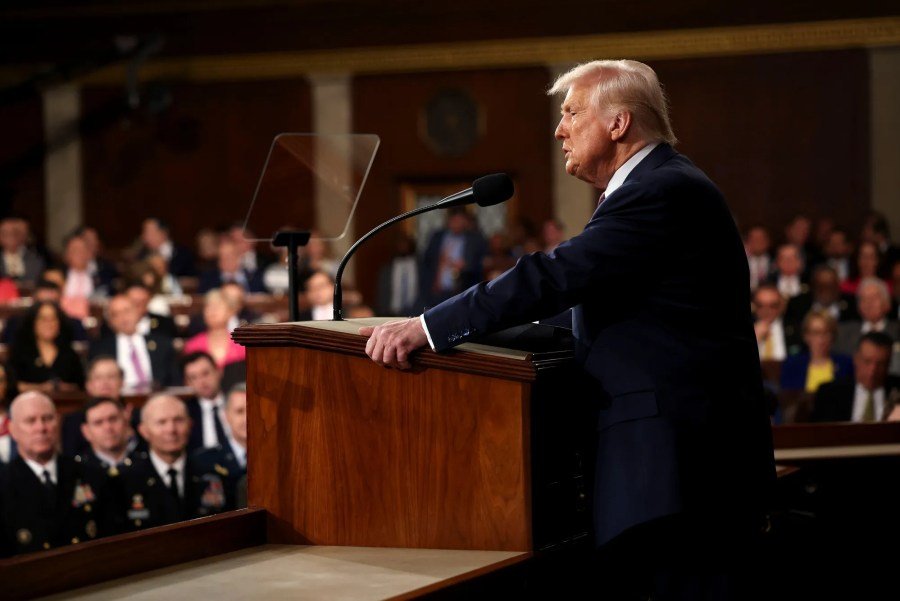
According to Global Times, a Chinese state-run newspaper, the selloff followed the White House’s announcement of additional tariffs on Chinese imports—raising the total tariff rate to a staggering 104%. This escalation has intensified fears of a renewed U.S.-China trade war, prompting widespread volatility in global equities.

Major Indexes See Red Across Asia-Pacific
In early morning trading, Australia’s S&P/ASX 200 index dropped 1.06%, while Japan’s Nikkei 225 plunged by 3.14%. The broader TOPIX index shed 3.26%. South Korea’s KOSPI declined 0.18%, and the tech-heavy KOSDAQ slipped by 0.44%. Hong Kong’s Hang Seng Index fell 2.27%, reaching 19,670.24 points around 10 a.m. local time.
In mainland China, the Shanghai Composite dropped 0.68% to 3,124.19, while the Shenzhen Component fell by 0.16%, landing at 9,409.48 points. These numbers reflect increasing caution among investors amid growing geopolitical and economic uncertainty.

U.S. Markets Suffer Historic Losses
The tariff shockwaves were first felt on Wall Street. On Tuesday, the S&P 500 dipped below the 5,000-point mark for the first time in nearly a year. Since Trump’s April 2 announcement of sweeping tariffs against U.S. trading partners, the index has lost $5.83 trillion in market value—its steepest four-day drop since its inception in the 1950s.
Tech stocks were among the hardest hit. Apple Inc. fell by 4.98%, while electric vehicle giant Tesla dropped 4.9%, making it the single largest loser on the day. Tesla CEO Elon Musk did not mince words, calling one of the White House’s top trade advisors a “fool” in a veiled social media post.

China Vows Retaliation as Experts Warn of Global Impact
Huo Jianguo, Vice President of the China Society for World Trade Organization Studies, warned that such aggressive trade policies would backfire. “The higher the tariffs, the greater the risk to the U.S. economy,” he said, citing increased inflationary pressures and potential slowdowns in U.S. economic growth.
A senior White House official confirmed that the latest move includes an additional 50% tariff on top of existing duties, escalating the total effective rate to 104%. Chinese authorities responded strongly, vowing a “measured yet firm” counter-response.

The rising tensions between the world’s two largest economies could cast a long shadow over global trade, corporate profits, and consumer sentiment in the coming months.
Author Profile

- My name is Ganpat Singh Choughan. I am an experienced content writer with 7 years of expertise in the field. Currently, I contribute to Daily Kiran, creating engaging and informative content across a variety of categories including technology, health, travel, education, and automobiles. My goal is to deliver accurate, insightful, and captivating information through my words to help readers stay informed and empowered.
Latest entries
 CAREERApril 15, 2026CBSE 10वीं रिजल्ट 2026 जारी: 93.70% छात्र पास, UMANG App और DigiLocker पर Direct Link से करें चेक
 RAJASTHANApril 15, 2026झालावाड़ में ग्राम विकास अधिकारी 10,400 रुपये रिश्वत लेते गिरफ्तार, ACB की ट्रैप कार्रवाई
 HEADLINESApril 15, 2026Bihar Welcomes New Leadership as Samrat Chaudhary Takes Oath as Chief Minister
 TECHNOLOGYApril 15, 2026Huawei Pura X Max Launch Set for April 20