Modi Highlights the Role of Journalists at Diwali Gathering
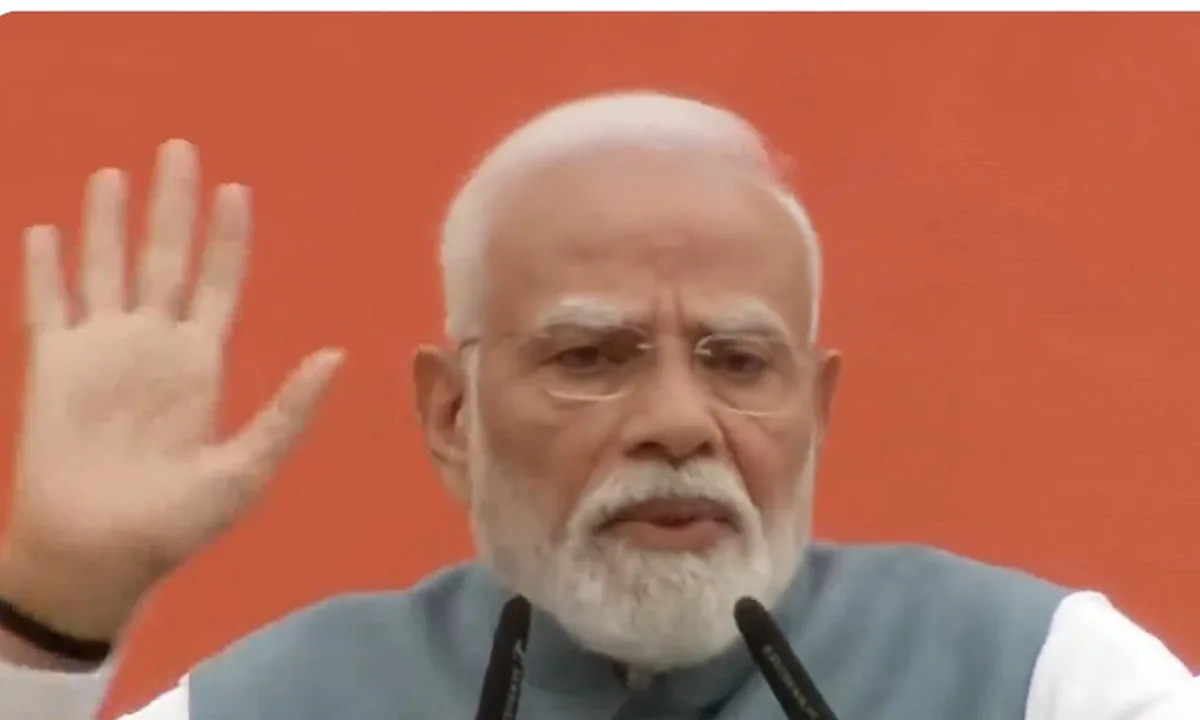
New Delhi, November 13: Prime Minister Narendra Modi addressed journalists at the Diwali gathering held at the BJP headquarters in Delhi. He emphasized that nothing is impossible in a newsroom. Whether it’s an earthquake or a flood, reporters risk their lives and set aside family concerns to cover the news while others flee for safety.
Modi reminisced about his past relationships with journalists, sharing a story from 2001. He recalled living at 11 Ashoka Road when journalists unexpectedly visited his room. In a light-hearted manner, they jokingly grabbed his throat and insisted he share sweets. When he inquired about the reason, they revealed he had become the Chief Minister of Gujarat. Modi admitted he was unaware of this development, but the journalists had already received the news. He noted that many journalists attended his oath-taking ceremony at their own expense, a story that dates back nearly 25 years.
Reflecting on changes in the media landscape, he mentioned how it has evolved from fax machines to Instagram reels. Previously, coverage was done using OB vans, but now mobile phones have become the new OB vans.
Modi also drew a parallel between news deadlines and the deadline for India to become a developed nation by 2047. He stated that deadlines are crucial in journalism as they determine priorities and increase pace. Similarly, the nation must work in phases towards the 2047 goal without waiting until the last moment.
He highlighted India’s achievements, noting that the country is among the largest mobile phone manufacturers, has constructed the world’s highest railway bridge over the Chenab River, and boasts the largest startup ecosystem. Modi mentioned the expansive UPI system, the provision of permanent housing for 4 crore families, the empowerment of 3 crore women entrepreneurs, and the electrification of the entire railway network.
In his appeal to the media, Modi stressed that communication is the greatest power in the 21st century. With affordable data, India has numerous success stories to share with the world. He urged the media to focus more on Indian talents, achievements, and inspiring individuals, stating that conveying the nation’s accomplishments is also a form of national service.
He called on the media to raise awareness among youth about the dangers of substance abuse. Issues like cleanliness, deepfakes, national unity, and social harmony should also be included in media discussions.