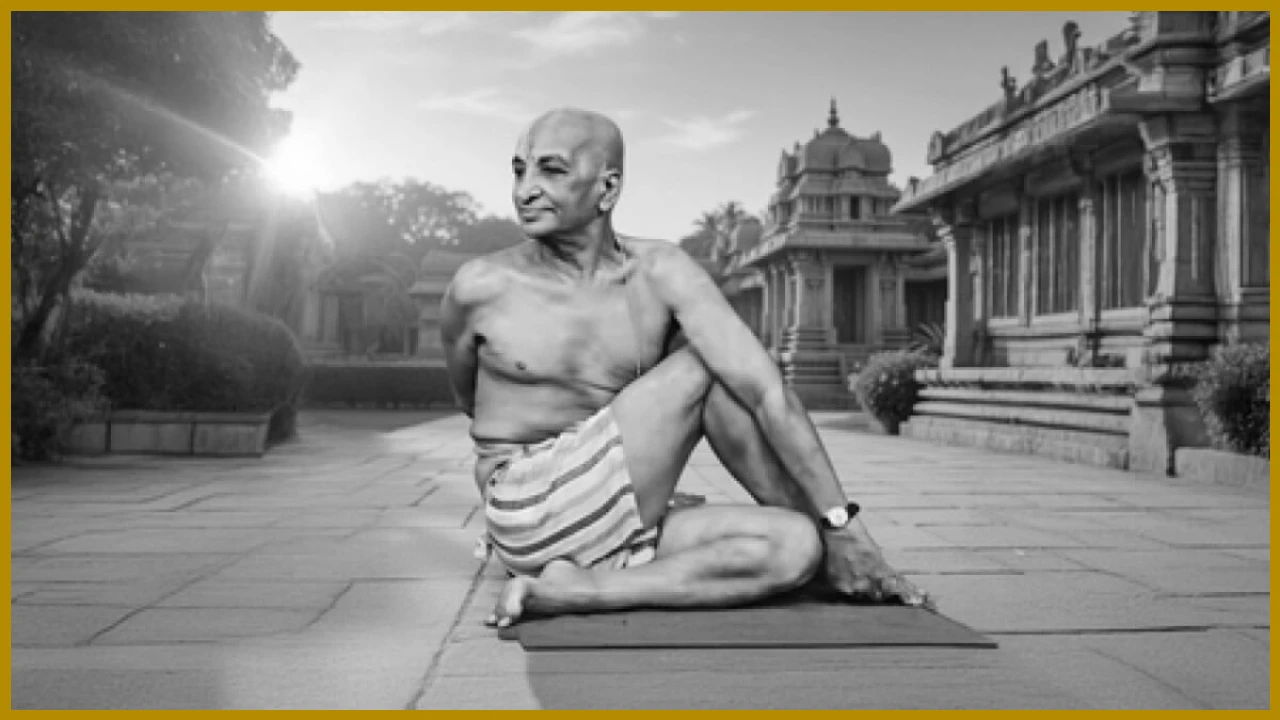
New Delhi, February 28: T. Krishnamacharya, widely regarded as the father of modern yoga, played a pivotal role in revitalizing Indian yoga traditions and giving them global recognition in the 20th century. His profound understanding of classical yoga, Ayurveda, and personalized teaching methods transformed yoga into a comprehensive lifestyle rather than just a practice.
Born on November 18, 1888, in the village of Muchukundapura in Karnataka’s Chitradurga district, Krishnamacharya hailed from an Iyengar Brahmin family. His father, a scholar of the Vedas, introduced him to Sanskrit, Vedas, and scriptures at an early age.
He studied the six systems of philosophy, including Nyaya, Sankhya, and Vedanta, at educational centers in Varanasi and Patna, where he also delved into logic, grammar, and Vedanta. His extensive study of Ayurveda laid a strong foundation for his yoga therapy methods.
Krishnamacharya claimed to have received long-term yoga training from Guru Yogeshwar Ram Mohan Brahmachari in the Himalayas. There, he deeply practiced the Yoga Sutras of Patanjali, asanas, pranayama, and the therapeutic aspects of yoga. Following his guru’s guidance, he embraced householder life and dedicated himself to spreading yoga.
In the 1920s and ’30s, under the patronage of Maharaja Krishnaraja Wadiyar IV of Mysore, Krishnamacharya directed yoga towards new horizons. He established a yoga school in the Mysore Palace and promoted yoga through public demonstrations, lectures, and publications.
His book “Yoga Makaranda,” published in 1934, is considered a significant work in modern yoga literature. He developed a sequencing method based on the combination of breath and movement, which gained worldwide popularity.
Many of Krishnamacharya’s students became renowned yoga teachers, including Indra Devi, K. Pattabhi Jois, B.K.S. Iyengar, T.K.V. Desikachar, and A.G. Mohan. They went on to develop major styles such as Ashtanga Yoga, Iyengar Yoga, and Viniyoga. Thus, the roots of most modern yoga traditions can be traced back to Krishnamacharya.
In India, he was not only recognized as a yogi but also as a skilled physician. He treated numerous patients by integrating Ayurveda and yoga. According to him, yoga was not merely a practice for physical flexibility but a science of balancing the mind, breath, and consciousness.
Krishnamacharya was well-versed in nutrition, herbs, oils, and other treatments. During initial assessments, he would ask patients if they were willing to follow his guidance, believing that trust was essential for healing.
Despite never leaving India, his influence spread globally. Today, if yoga has become a worldwide movement, his contributions are central to that development.
His teachings elevated yoga beyond physical exercise, adapting it to individual needs, linking it to health and wellness, and making it globally acceptable. He is remembered for his contributions to yoga and Ayurvedic healing methods. T. Krishnamacharya passed away in Chennai on February 28, 1989, at the age of 100, reportedly due to natural causes. Throughout his life, he maintained his health through yoga.
Author Profile
- My name is Ganpat Singh Choughan. I am an experienced content writer with 7 years of expertise in the field. Currently, I contribute to Daily Kiran, creating engaging and informative content across a variety of categories including technology, health, travel, education, and automobiles. My goal is to deliver accurate, insightful, and captivating information through my words to help readers stay informed and empowered.
Latest entries
 HEADLINESApril 10, 2026Akhilesh Yadav Critiques BJP and Expresses Support for Nitish Kumar as Prime Minister
 RAJASTHANApril 10, 2026Villagers Demand Speed Breaker at Devari Intersection Amid Protests
 HEADLINESApril 10, 2026Rajasthan Minister Criticizes Congress Over Delhi Visits and Development Projects
 HEADLINESApril 9, 2026Rajasthan Set for Transformation with Pachpadra Refinery and Jaipur Metro Phase-2 Projects