
In a stunning scientific twist, researchers at the University of Massachusetts Amherst have observed a liquid that seemingly challenges fundamental thermodynamic principles—an outcome sparked entirely by accident.
A Discovery Born from Curiosity
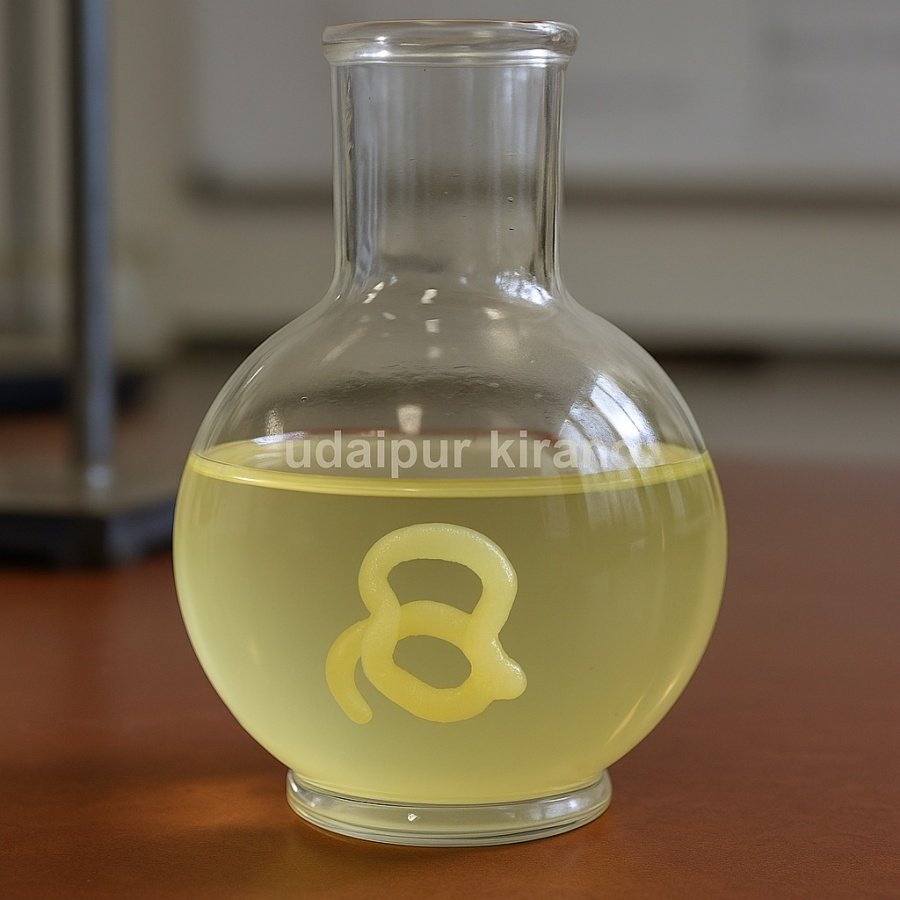
Graduate student Anthony Raykh, pursuing polymer science and engineering, stumbled upon the phenomenon while experimenting with a combination of oil, water, and nickel particles. Instead of forming the typical spherical droplets dictated by thermodynamic laws, the mixture spontaneously adopted the elegant shape of a Grecian urn—and astonishingly returned to it even after being disturbed multiple times.

The findings, published in the journal Nature Physics on April 4, 2025, have left physicists and chemists alike both intrigued and puzzled.
Defying Thermodynamics—Or Appearing To
Under conventional physics, immiscible fluids like oil and water minimize their surface tension by forming spheres—shapes that require the least interfacial area. This behavior is a classic example of thermodynamic equilibrium.
However, in this case, the shape that formed had a greater surface area, raising eyebrows in the scientific community. “That shape should not exist under typical thermodynamic rules,” said Professor Thomas Russell, a co-author of the study. “It implies that something else is in play.”

Magnetic Fields Create a New Dynamic
Further investigation revealed that the key was in the nickel particles. Their magnetic properties generated interactions strong enough to override the fluid’s natural inclination to minimize interfacial energy.
As nickel particles aligned into chains along the liquid’s surface, they created a stable, higher-energy structure. This dynamic essentially altered the rules of emulsion formation in the system—producing the urn shape instead of a sphere.

“This doesn’t mean the laws of thermodynamics are broken,” Russell clarified. “It just means the system isn’t governed solely by those forces—magnetic interactions are playing a significant role.”
A New Frontier in Materials Science?
The implications of this discovery stretch far beyond the lab. Understanding and controlling such shape-retaining liquids could lead to breakthroughs in soft robotics, targeted drug delivery, and programmable materials. Scientists are now exploring whether this mechanism can be replicated with other magnetic or conductive particles.

The research reminds us that even in a field as mature as thermodynamics, surprises are still possible—especially when curiosity leads to unexpected combinations.
Author Profile

- My name is Ganpat Singh Choughan. I am an experienced content writer with 7 years of expertise in the field. Currently, I contribute to Daily Kiran, creating engaging and informative content across a variety of categories including technology, health, travel, education, and automobiles. My goal is to deliver accurate, insightful, and captivating information through my words to help readers stay informed and empowered.
Latest entries
 UDAIPURMarch 25, 2026Over 1,100 Rural Residents Benefit from Health Camps in Rajasthan and Uttarakhand
 UDAIPURMarch 24, 2026Collector Inspects Road Repair Works in Badgaon Sub-District
 UDAIPURMarch 24, 2026Two Fugitive Suspects Arrested in MDMA Trafficking Case
 RAJASTHANMarch 24, 2026Victim Alleges ₹800,000 Fraud and Threats from Accused in Singrauli