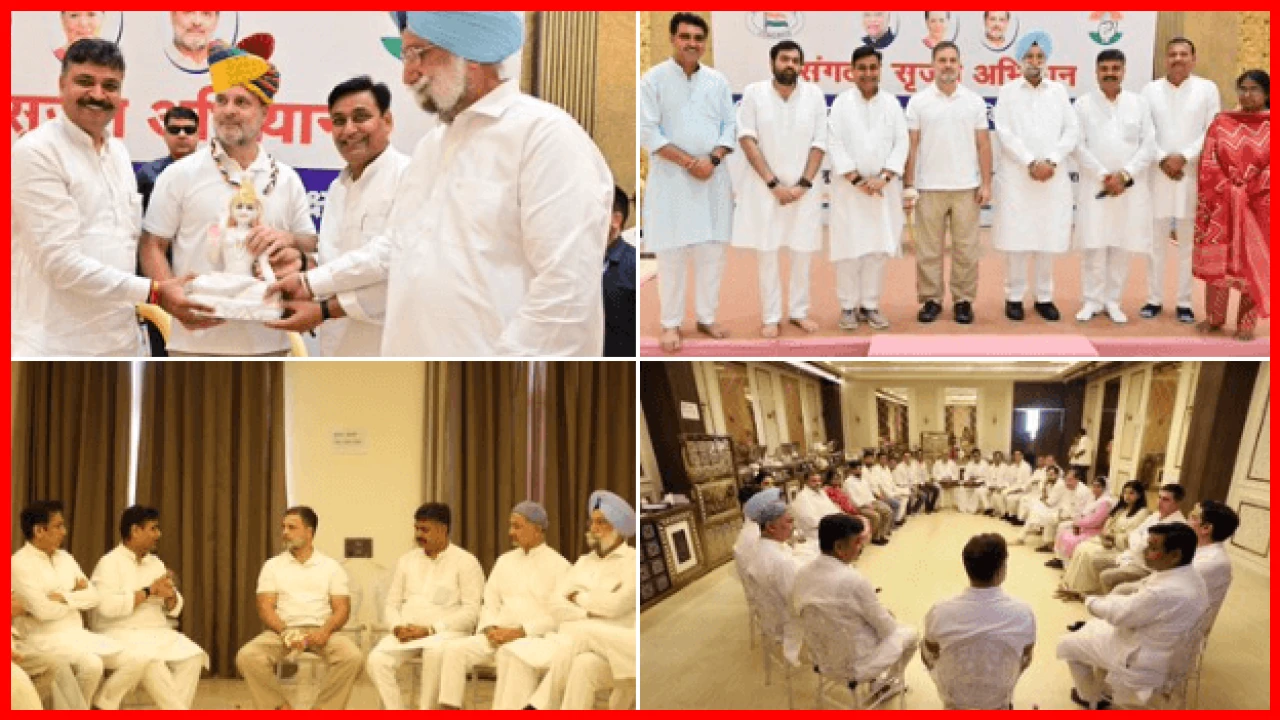
Ajmer, June 1: Congress leader Rahul Gandhi openly addressed the internal challenges within the party during the closing ceremony of the 10-day national retreat held in Pushkar. He highlighted issues such as factionalism, ticket politics, and a culture of sycophancy in front of district presidents and officials. Through a symbolic play, he aimed to illustrate the challenges faced by the Congress party, emphasizing the need for a culture of “tapasya” (penance) rather than mere “puja” (worship).
Gandhi stated that the strength of Congress lies in hard work, struggle, and continuous engagement with the public. He drew a parallel with cricketer Virat Kohli, noting that his success is a result of years of dedication, discipline, and perseverance. In contrast, he stressed that individuals in politics and public life should establish their identities based on their work and commitment. He called for party members who prioritize public service over seeking personal gain or positioning themselves around influential leaders.
During the program, Gandhi invited several district presidents to the stage for a symbolic presentation. He asked one district president to act as the state president while placing others in roles of party workers requesting tickets. This demonstration illustrated how the tendency to orbit around leaders for positions and tickets can weaken the organization. He asserted that this culture must be eradicated, urging workers to build their identities among the public.
Gandhi also used dramatic presentations to explain the internal strife and competition within the organization. By inviting state Congress president Govind Singh Dotasra and senior leader Ram Lal Jat to the stage, he symbolically conveyed that the struggle for positions among leaders is detrimental to the party’s interests. He emphasized the need for Congress to rise above internal competition and factionalism, advocating for collective leadership and teamwork.
In his address, Gandhi referenced Indian culture and spiritual traditions, using symbols of Shiva and Vishnu to explain political ideology. He stated that Congress believes in politics of simplicity, penance, equality, and social justice. He urged the organization to uphold values that ensure respect and opportunities for every individual, prioritizing the voices of marginalized communities.
Gandhi instructed district presidents to extend their roles beyond organizational tasks, encouraging them to speak out against injustices and atrocities in society. He emphasized the need for Congress leaders to actively protect the rights of the poor, Dalits, women, minorities, and other vulnerable groups. He also called for sensitivity towards issues of animal cruelty and social injustice.
He concluded by stating that the true strength of Congress lies in its workers. If every official within the organization engages with the public with honesty and dedication, no one can prevent the party from becoming stronger. Gandhi highlighted unity, discipline, and public service as the party’s greatest assets, urging workers to infuse new energy into the organization.
Author Profile

- My name is Kuldeep Singh Chundawat. I am an experienced content writer with several years of expertise in the field. Currently, I contribute to Daily Kiran, creating engaging and informative content across a variety of categories including technology, health, travel, education, and automobiles. My goal is to deliver accurate, insightful, and captivating information through my words to help readers stay informed and empowered.
Latest entries
 HEADLINESJune 2, 2026Saints Demand Reversal of Land Acquisition for Bhairana Dham
 PoliticsJune 2, 2026Rahul Gandhi Addresses Internal Challenges at Congress Retreat in Pushkar
 PoliticsJune 1, 2026Ashok Gehlot Emphasizes Ground Leadership for Organizational Strength in Congress
 NationalMay 31, 2026DK Shivakumar Appeals for Calm Ahead of Swearing-In Ceremony