


Breakthrough Siderite Discovery Could Explain Ancient Atmosphere and Climate on the Red Planet
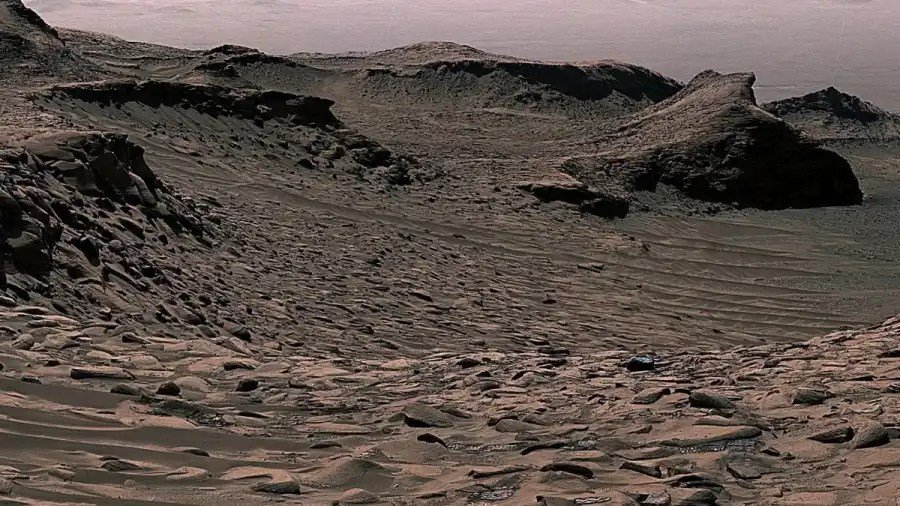
Pasadena, CA – NASA’s Curiosity Rover has made a significant geological breakthrough on Mars that could reshape our understanding of the Red Planet’s ancient atmosphere. A recent discovery of the mineral siderite—a type of carbonate—within the sulfate-rich layers of Mount Sharp could solve the long-standing mystery about where Mars’ carbonates went and offer insights into how Mars once supported liquid water.
Carbonates: The Missing Atmospheric Clue?
For decades, planetary scientists have theorized that Mars’ early atmosphere was thick with carbon dioxide, creating a warm enough environment for liquid water to exist on the surface. In such a setting, carbonate minerals would typically form as a result of the interaction between CO₂, water, and Martian rock. However, their relative absence on Mars had puzzled researchers—until now.

Discovery of Siderite in Gale Crater
Published in Science in April, researchers confirmed the presence of siderite at three Curiosity drill sites within Gale Crater—a location known for its layered rock formations.
“The discovery of abundant siderite in Gale Crater represents both a surprising and important breakthrough in our understanding of the geologic and atmospheric evolution of Mars,” said Dr. Benjamin Tutolo, lead author and Associate Professor at the University of Calgary.

Siderite’s presence implies that CO₂-rich conditions did exist, allowing for the formation of carbonates in ancient Mars’ warm and wet environment.
How Curiosity Made the Find
The Curiosity rover employs a drilling process that penetrates about 3 to 4 cm into Martian rock layers, collecting powdered samples. These samples are then analyzed using CheMin (Chemistry and Mineralogy instrument), which uses X-ray diffraction to determine the mineral composition.

-
Instrument Developed By: NASA Ames Research Center, Silicon Valley
-
Data Analyzed By: ARES Division, NASA Johnson Space Center, Houston
These results add weight to theories that carbonates may be concealed beneath sulfate-rich layers across Mars, eluding detection by prior near-infrared satellite missions.
Rewriting the Climate History of Mars
If widespread carbonate deposits are indeed hidden below the surface, it could recalibrate current models of Mars’ climate, suggesting a thicker CO₂ atmosphere and warmer conditions than previously believed—conditions possibly suitable for sustained surface water and even microbial life.

Scientists also propose that other carbonate minerals may have degraded over time or are simply undetectable using current satellite instruments, highlighting the need for deeper subsurface analysis.
What’s Next for Curiosity and Mars Science
The Curiosity rover continues to explore the sulfate-rich region of Mount Sharp, with further drilling and analysis planned to validate and expand upon these findings. As NASA deepens its understanding of Mars’ geologic history, each discovery brings us closer to answering a core question: Was Mars ever habitable?

Curiosity is part of NASA’s Mars Exploration Program, managed by JPL (Jet Propulsion Laboratory) for NASA’s Science Mission Directorate. Built and operated by Caltech in Pasadena, Curiosity continues to be a cornerstone mission in Mars exploration.
Author Profile

- My name is Ganpat Singh Choughan. I am an experienced content writer with 7 years of expertise in the field. Currently, I contribute to Daily Kiran, creating engaging and informative content across a variety of categories including technology, health, travel, education, and automobiles. My goal is to deliver accurate, insightful, and captivating information through my words to help readers stay informed and empowered.
Latest entries
 PoliticsMay 26, 2026Sachin Pilot Criticizes Government for Delaying Local Elections in Tonk
 PoliticsMay 25, 2026BJP President Madan Rathore Heads to Bikaner Ahead of Amit Shahs Visit
 PoliticsMay 25, 2026Congress Leaders Visit Ajmer Sharif Dargah, Seek Blessings for Peace and Prosperity
 UDAIPURMay 24, 2026Body Found in Vacant Plot in Savina Area
